How to prove email consent (and why authors should)
· 4 min read
Collecting consent is half the job. The other half is being able to show it. Most of the time nobody asks, and then one day something prompts the question, a reader complains they never signed up, your email provider queries a spam report, or you move to a new platform and need to demonstrate your list is clean. If you cannot show how someone joined, a simple question becomes a real problem. This guide covers what a good consent record looks like and how to keep one without any extra work.
What "proof of consent" actually means
Proof of consent is a record that answers three questions about each subscriber: what they agreed to, and when, and how. It is not enough to know that a reader is on your list. You want to be able to show the exact wording they saw, the moment they agreed to it, and the fact that the action was theirs.
If you can produce that for any reader on request, you are in a strong position. If you cannot, you are relying on memory and goodwill, which is exactly what fails under pressure.
What a good consent record contains
A solid record for each subscriber includes:
- The consent wording they agreed to. The precise text next to the checkbox, as it was worded on the day they signed up, not a general description of it.
- The timestamp. The date and time they gave consent.
- The context of the signup. Which reader magnet or form it came from, and ideally the technical request details, so the record stands on its own.
- The confirmation step, if any. If you use double opt-in, the record that they clicked the confirmation link strengthens the whole thing.
Notice what is not on the list: nothing here requires you to store anything sensitive. It is simply a faithful record of an agreement the reader chose to make.
Why authors specifically should care
This is not only about rules. A provable consent record helps you in ordinary, practical ways.
- Deliverability. If your provider ever questions a complaint, being able to show clean consent protects your sender reputation, which is what keeps your emails reaching inboxes.
- Peace of mind when you switch tools. Authors change email platforms and delivery tools more often than they expect. Portable consent records mean you can move without leaving your proof behind.
- Trust. Being the author who can immediately show how someone joined is the author readers and platforms trust. It is quiet, but it matters.
The trouble with doing it by hand
Whether you use single or double opt-in changes how strong that record is, but either way it has to be captured automatically. In theory you could keep your own spreadsheet of who signed up and when. In practice it falls apart quickly: the wording on your signup page changes over time, so a date alone does not tell you what a reader actually agreed to; manual logs get out of step with reality; and reconstructing any of it months later is miserable. Consent records are only useful if they are captured automatically, at the moment of signup, and stored exactly as they were.
How Storyfinch does it
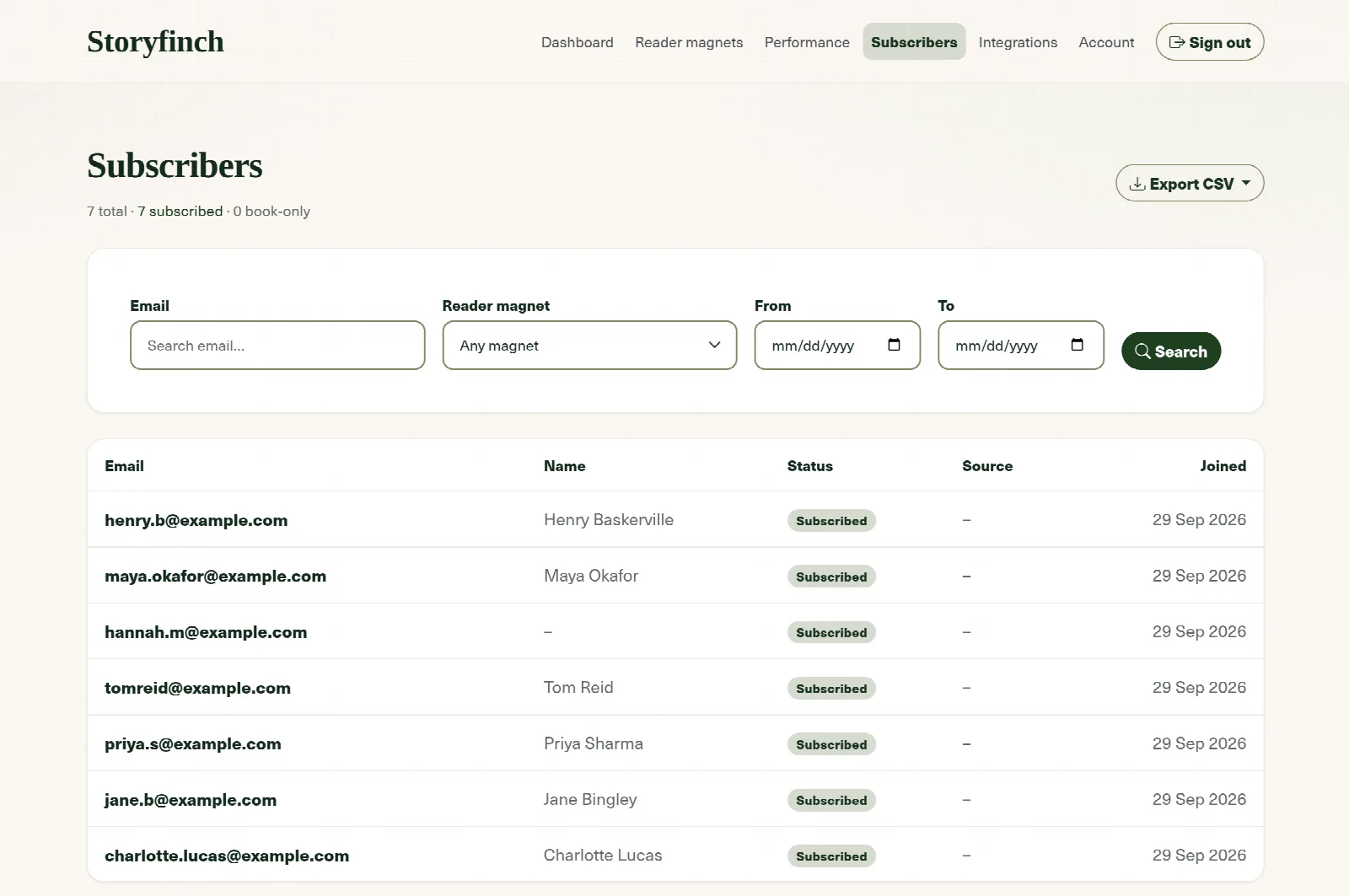
Storyfinch records consent for every signup as an immutable record you can export at any time. For each reader it stores the exact wording they agreed to, the moment they agreed, and the request details, and if you use the email verification step, the confirmation too. You do not maintain anything by hand, and because you can export it, the proof travels with you if you ever change tools. In other words, the hardest part of proving consent is handled before you ever need it.
Frequently asked questions
How long should I keep consent records?
As a general rule, keep them for as long as the reader is on your list, and for a reasonable period after they leave, so you can answer questions about past subscriptions. Storing them is cheap and having them is what counts.
What if I have been collecting consent but not recording it?
Start recording properly now, so everything from here forward is covered. For existing subscribers you cannot account for, consider a re-permission email that asks them to confirm, giving you a fresh, recorded opt-in.
Do I need this if I only have a small list?
Yes, arguably more so. A small author is the one most likely to be caught out by a platform switch or a single complaint, and a proper record turns either into a non-event.
Grow your list with your next book
Give readers a free book and turn them into subscribers, with secure delivery and consent built in.
Create your free accountFree plan · No card required · Set up in minutes