Author mailing lists and consent: a plain-English guide
· 5 min read
Growing a mailing list is only worth it if the people on it actually want your emails, and if you can show they agreed to receive them. That is what consent is about. This guide explains consent in plain English, including how it works under the main rules, how to collect it, and how to keep your list clean. It is general guidance, not legal advice, so check the specifics for your situation and jurisdiction.
What consent means here
Consent means a reader has clearly and freely agreed to join your mailing list. In practice that usually means a checkbox they tick themselves, not one you tick for them, next to wording that says what they are signing up for. Giving away a book is fine. Quietly adding everyone who downloads it to a marketing list, without a clear opt-in, is not. The reader should be able to get the book and decide separately whether they also want your emails.
The rules, in plain English
Two sets of rules come up most often for authors, and the safe approach satisfies both.
- GDPR applies to readers in the UK and the EU. It expects consent that is freely given, specific, and clearly recorded. In practice that means an unticked checkbox, plain wording, and a record of what each person agreed to and when.
- CAN-SPAM applies to email sent to readers in the United States. It is less strict about opt-in, but it requires a clear sender identity, an honest subject line, a postal address, and a working unsubscribe link in every email.
You do not need to track where every reader lives. If you collect a clear opt-in, keep a record of it, and give people an easy way to unsubscribe, you are handling the essentials for both.
Single opt-in vs double opt-in
With single opt-in, a reader joins your list the moment they submit the form. It is simple and loses fewer signups. With double opt-in, the reader also clicks a confirmation link in an email before they are added. That extra step confirms the address is real and that its owner actually asked to join. Double opt-in produces a cleaner, more engaged list and stronger proof of consent, at the cost of a few people who never click the link. Storyfinch supports an email verification step if you want to use double opt-in.
What good consent wording looks like
Clear wording protects you and sets expectations. Compare these:
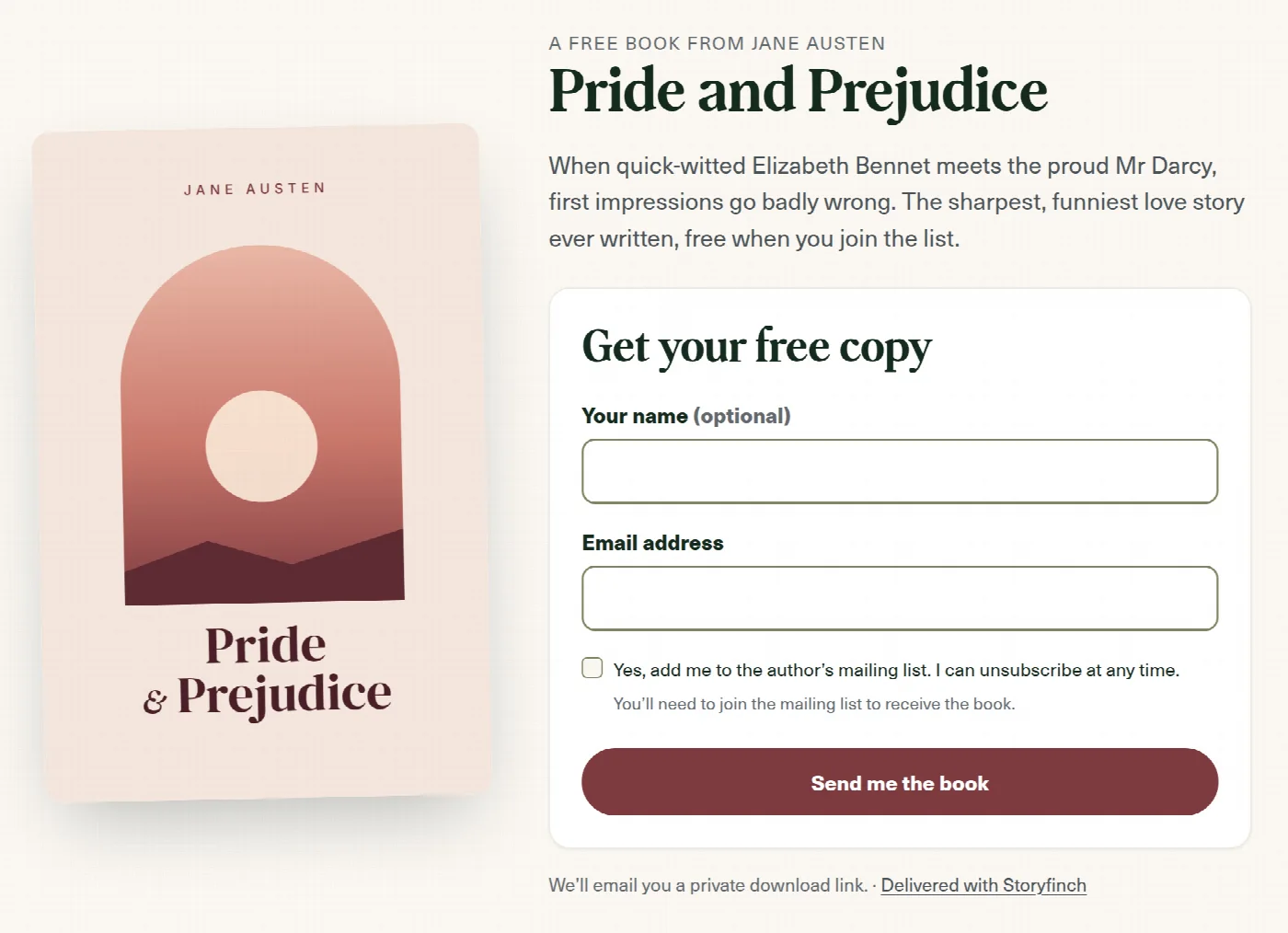
- Good: "Yes, add me to the mailing list for new releases and occasional news, and I can unsubscribe at any time." An unticked box that the reader controls, saying what the emails will contain.
- Weak: "Subscribe." One word, with no sense of who is emailing, how often, or how to leave.
- Avoid: a pre-ticked box, or wording that buries the signup inside the download so readers do not realise they joined a list.
Why consent protects you, not just your readers
- People who chose to join are far more likely to open and enjoy your emails, which lifts your engagement.
- A clean, consented list keeps your deliverability healthy, so your emails reach inboxes instead of spam folders.
- If anyone ever questions how a reader ended up on your list, you have a record showing they agreed.
How to collect and record it properly
Show clear consent wording at signup, let the reader tick the box themselves, and record the exact wording they agreed to along with the time. Storyfinch does this for every signup: it stores the consent wording, the moment of agreement, and the request details as an immutable record you can export at any time. You can also choose whether joining the list is required or optional for each book, and add an email verification step for double opt-in.
Keep your list clean over time
Consent is not only about the moment someone joins. Make unsubscribing easy and honour it promptly, remove addresses that keep bouncing, and do not import old contacts who never opted in. A smaller list of people who want to hear from you is worth far more than a large one that does not. To check your own setup end to end, run through our quick mailing list audit.
Frequently asked questions
Can I add everyone who downloads my book to my list?
Not without a clear opt-in. Let readers get the book, and give them a separate, honest choice about joining your emails.
Do I need double opt-in?
It is not always required, but it produces a cleaner, more engaged list and stronger proof of consent. Storyfinch supports it if you want it.
What records should I keep?
The wording each reader agreed to, and when. Storyfinch stores this automatically and lets you export it.
Grow your list with your next book
Give readers a free book and turn them into subscribers, with secure delivery and consent built in.
Create your free accountFree plan · No card required · Set up in minutes